
DESCRIPTION:
This demo uses sodium polyacrylate, a super absorbing polymer found in diapers, to turn water into a gel. The sodium polyacrylate has carboxylate anion portions and sodium cation portions. Water is attracted to the sodium ions, thus it enters the polymer through osmosis and the polymer swells and the sodium carboxylate is ionized. The anionic carboxylates on the polymer repel each other, causing the polymer to swell, trap the water, and form a gel. When NaCl is added the increase of electrolytes (ions) in the water shield the repulsion of the carboxylates, thus contracting the polymer and expelling the liquid water.
TOPICS COVERED:
– polymers
– diffusion
– hydrogen bonding
MATERIALS NEEDED:
– sodium polyacrylate
– water (DI works best)
– beaker
– NaCl
– stir rod
PROCEDURE:
1. Place 5-7g of sodium polyacrylate in the bottom of a beaker
2. Quickly add ~300mL of water (pour from a significant height, the splashing will stir the mixture better)
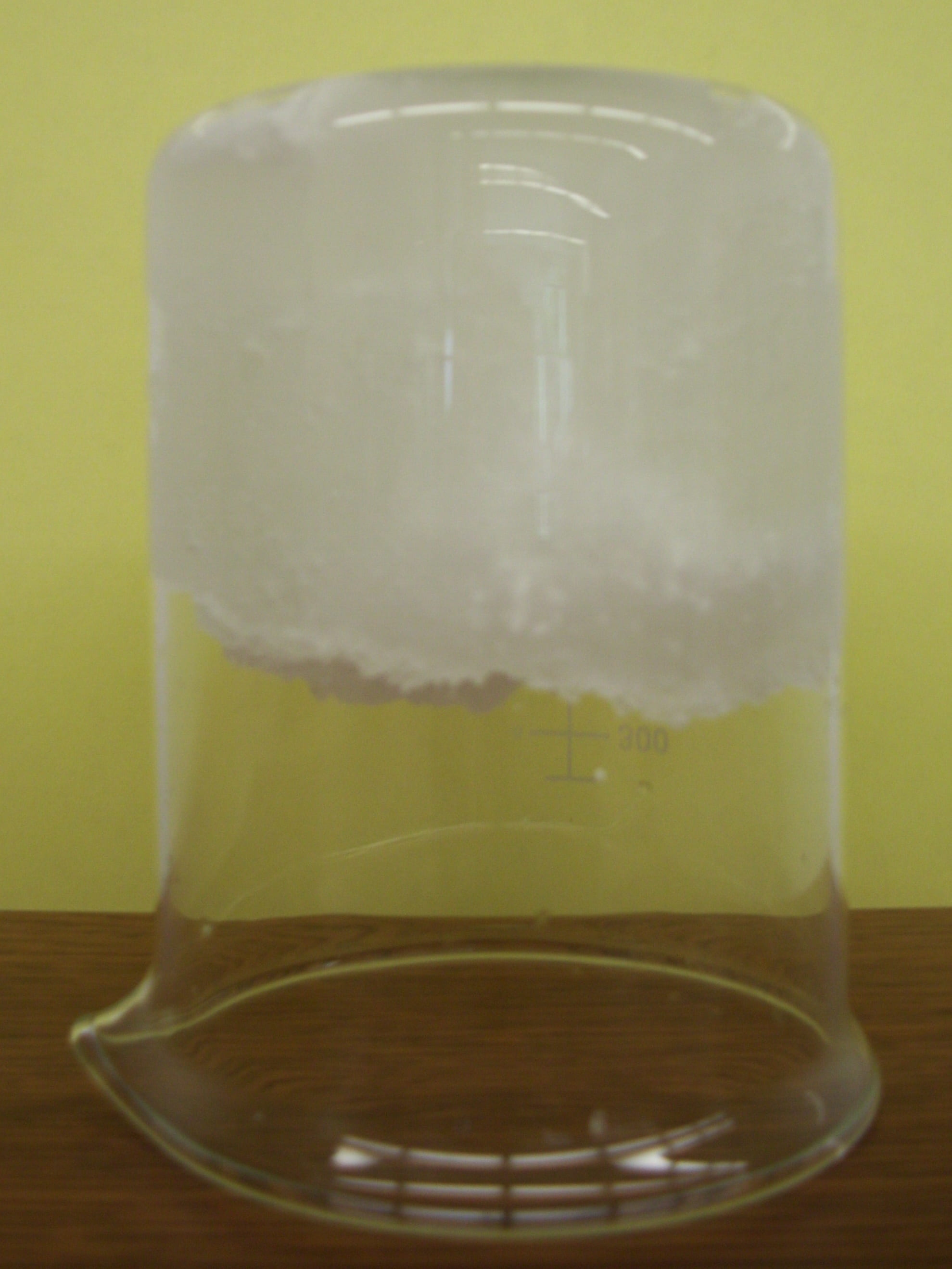
3. The beaker can be turned over to show that the water has been absorbed completely
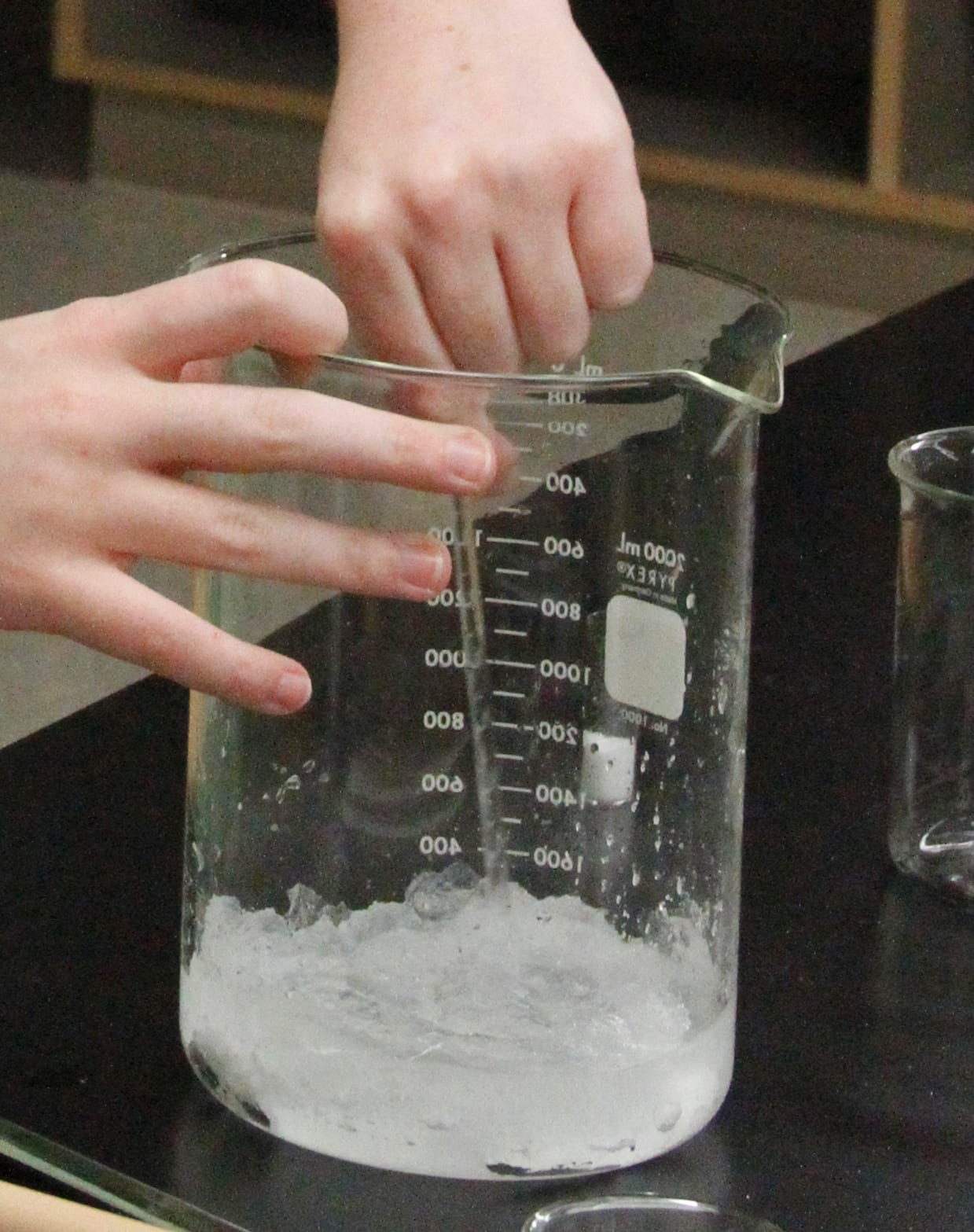
4. Add salt and stir until the mixture gets back to a liquid consistency
ADDITIONAL COMMENTS:
Making sure the polymer is even on the bottom of the beaker before pouring will help.
SAFETY:
Safety goggles should be worn at all times. Once the mixture is back to liquid consistency it can be poured down the drain.
REFERENCES:
Shakhashiri, B.Z. Chemical Demonstrations; University of Wisconsin Press: Madison, 1989; Vol. 3, pp 368 – 371.
STORY:
– Tell the students that you’re going to pour all of the water you’re holding into the beaker and the water will disappear.
– Can also ask for 3 volunteers who don’t mind getting wet. Have 3 coffee mugs and add water to one of them (it has the sodium polyacrylate in it). Then mix the mugs all up and ask the audience which cup should get poured on which person.