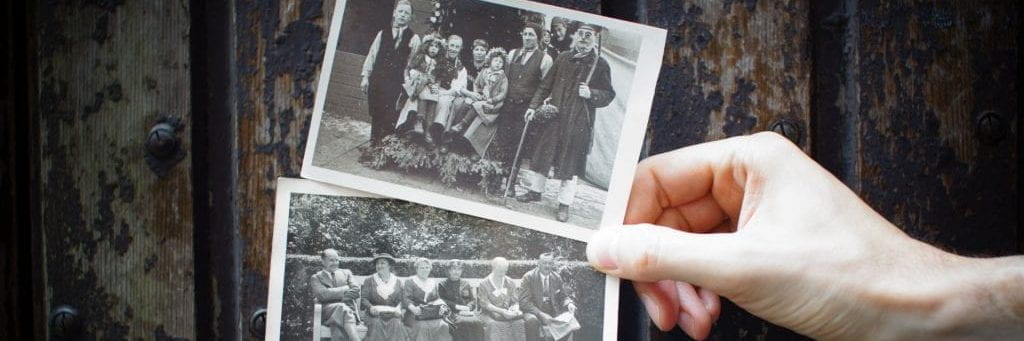
Interview with Paul Gelinas, History 150 Spring 2025, Conducted by Aria Hall, March 2, 2025.
Biography:
Paul Gelinas was born to Andre and Lina Gelinas on May ninth 1940 in Fitchburg Massachusetts after his father immigrated from Canada at the age of thirteen, speaking only French. He is the second son of four, all of whom, excluding my grandfather, have followed in their fathers footsteps, becoming attorneys. He was raised in, and given free reign of, the city until age seven when his family moved to Pearl Hill, an abandoned three acre farm. He was class president of his private catholic high school, and from there he attended Worcester polytechnic institute from 1958-1962, earning a bachelors in Electrical Engineering which he put to use from the moment he graduated, and continues to use today at age 83. He is a father of seven, my mother being his youngest, a grandfather to thirteen, and a great-grandfather to five. I plan to interview him about working life in the 60-present, changing technology, cultural changes and how, or rather if, they affected his career or education, and family life as a provider for a family of nine. Paul is an overwhelmingly hardworking and positive person, although he may try and convince you otherwise, and has dedicated his life to the work and people he loves.
Research:
According to the National Bureau of Economic Research, “The industries with large increases in the pace of skill upgrading in the 1970s and 1980s versus the 1960s are stronger users of computers: relative to other industries, they exhibit greater growth in the use of computers by employees; more capital investment in computers per worker; and investment in computers accounts for a larger share of total investment.” Technological improvements have had a lasting impact on working life and the economy globally. This is a trend that that we can trace back to the very beginnings of human enterprise, and that we see in the present with the integration of new AI technology into the workplace.
In post WWII America citizens bore witness to societal shifts in every aspect of life. While there was still a lot of pressure to create a “nuclear family” people could afford divorce after the economic boom following the great depression and WWII, Civil rights expanded exponentially, Women joined the workforce at a higher rate than ever before seen, and technological advancements brought about massive changes to working life and the jobs/educations that were prioritized.
Bibliography:
(Peer Reviewed) Autor, D. H., Katz, L. F., & Krueger, A. B. (1997). How has computer use changed the labor market? National Bureau of Economic Research. https://www.nber.org/digest/sep97/how-has-computer-use-changed-labor-market.
Library of Congress. (n.d.). Post-war United States (1945-1968) overview. https://www.loc.gov/classroom-materials/united-states-history-primary-source-timeline/post-war-united-states-1945-1968/overview/
Li, J., Zhang, X., & Wang, S. (2022). Working with AI: Can stress bring happiness? Journal of Occupational Health, 64(1), 1-10. https://doi.org/10.1002/1348-9585.12391
Transcript:
Aria Hall 0:00
All right, okay. So my first question is, do you think that your father’s experience of starting his life, career and family during the Great Depression has impacted your work ethic or attitudes?
Papa 0:14
Absolutely, yeah.
Aria Hall 0:16
In what ways?
Papa 0:18
My father from the time I knew him…. Now, my father was much older when he got married again, part of the Great Depression problem that a lot of men had at that time. But he was well over 30 years old, 40. He was 43 when he got married. My mother was in in her 30s, 11 years difference, and he growing up, he he wasn’t the kind of guy go out and play ball with. Basically, he worked, [Yeah] he worked very hard. He was an attorney. He had a private practice, as well as being the Assistant District Attorney for the Worcester County in Massachusetts, which consumed about half his working time. So he worked. I just remember him always going to work. And of course, that made a big impression on me is that work was a central part of life. My mother also, although she was a stay at home mom, because at that time, once you a woman was married, she had to give up her job. She was a teacher. She loved teaching, but when she married my father in 1936 she had to quit. Yeah, she always was doing something, either in the home or as a volunteer in some kind of a function. So she always worked, too. Both of them, work was very central to our family.
Aria Hall 1:53
Yeah, you described being class president at your private Catholic High School and giving a graduation speech where you described the world as uncertain and mentioned to me the divergent times that made you feel this way. Could you describe some of the changes you were seeing in society, and if these affected your career or education?
Papa 2:13
Changes? Again, the growing up was pretty well structured. We went to school, we came home, we did our homework, we had our dinner. My father always insisted that we ate together one meal every day. Had to wait until he came home. If he was late coming home, we had to wait so we had a very structured upbringing by the time I got into high school, which was in the was 1954 when I was a freshman, I could see that a lot of people, my peers, weren’t under such a structured environment. Yeah, and that puzzled me for a little time, but in talking with them, eventually, I discovered that, you know, there are some families that have very set rules, and there are other families that don’t, and there are other families that have set rules, but all of a sudden, the children decide that they’re not going to live with the rules. Now, in our upbringing, you you live by the rules. There were consequences if you didn’t, not physical punishment, per se, but there were consequences. And then come to find out that, well, in some families, there weren’t substantial consequences, and that more and more I saw as I went through high school that a lot of the kids just they didn’t have a set of rules that they felt they had to adhere to. [Interesting] so this started me down the road to thinking this is not a tremendously certain world that I’m…becoming acquainted with.
Aria Hall 4:20
So you mentioned that the employment opportunities for electrical engineers were plentiful, and that you received three job offers right out of school, but that the pay offered for those positions didn’t initially reflect the market’s necessity for those jobs. Why do you think that was?
Papa 4:41
When I was hired by the companies or interviewed by the companies, the thought process, as I discovered later on, with most of these companies, is, we need engineers. We’re not sure 100% why, but we know. We’re going to need them, so we’re going to hire them as they become available. And engineering wasn’t a mainstay of the educational system at the time. They were, you know, quite a few colleges who did specialize in engineering, but not as many as in other fields. So there was this pressure on companies to hire engineers. [yeah] So as a consequence, in 1962 when I graduated, getting out of school, there were a lot of job offers. Now, some of the jobs could have been done with people, could have been done by people without engineering degrees. But again, this feeling in the companies that we need to hire engineers, we need to have them before somebody else gets them, was pretty prevalent.
Aria Hall 5:56
Interesting, okay, sorry, go ahead, [I thought I had spoken over intervewiee] In your first job out of college with Fox brothers company, you worked in production, and after three years there, you primarily worked in operations. Which did you prefer?
Papa 6:13
I always loved to be involved in the making of things. Now as a factory engineer, I was at the ground level. Basically. I wasn’t actually doing the work, but I was very close to those doing the work. I enjoyed that a lot. However, as I started to get into the overall management of a company making something, I started to see a very rewarding type of work that came my way. I could still get involved with the actual nuts and bolts. I could study it. I could maybe recommend a better way of doing things, I could look at the processes that were involved, and I had a little more control over making change. So I guess I’d have to say that as I moved into more of a management or operations role, as opposed to the actual functioning of the manufacturing facility, I really found it much more rewarding.
Aria Hall 7:32
Okay, cool. My next question is: you’ve worked in manufacturing fields and companies for most of your career, and even had the opportunity to help innovate/oversee new technologies such as tack belts. What technological advancement that you’ve lived through would you say has impacted your working life, specifically the most? And why
Papa 7:54
Computers.
Aria Hall 7:55
Computers?
Papa 7:56
When I went to school, computers were just becoming available on a more general plane. For the undergraduates at the school I went to, there was no access to computers unless you knew somebody, either a graduate student or a professor who was willing to give you a little access to it. In fact, what we had to work with in terms of calculating devices were slide rules. We had. There were electronic calculators on the market. They were expensive, and most of the students did not were not able to get an electronic calculator to work with. Slide rules were the thing. Now, as I got into actual working computers started to become central to the management of companies. Even smaller companies would tend toward trying to take advantage of what computers had to offer. The first company I worked for FoxBro, company was large enough to make a substantial investment with IBM on a system called IBM 360 and it was touted as one which could service remote units from a central location. The time I was the company, this never happened. But the minute, the people in the company did send me to a couple of courses sponsored by IBM in order to learn more about their products and what they offer, and maybe that way stimulate some kind of application in the part I was working in. So it gave me a little introduction to the actual computers, which I didn’t get in school, [Yeah] programming language and operation things like that. So that was that was quite helpful in stoking my interest in computers. The second company I worked for, which was Hunter sportswear, had no computer available anytime I worked there. However, I was interested in in analyzing statistics and keeping track of things as a production manager, and I happened to run into this person who was selling a product, which they were cards, which you’d clip out corners or along the edge of the card with a with a little tool, and then you could sort them on the end of a rod, and that way, You could sort them by any of the things you you’d have keyed in on the card. You’d write in what you wanted on the card description. And in my case, it was the, I was in charge of production. There was, generally at any given time, about eight or 9000 garments in production, in various stages of production. So I use these cards to keep track of where everything was. All of the garments were cut at our location, but stitching was done at a number of different locations. So you had to keep track of everything that was. And I would use this card system. And it was, it was quite ingenious. It was very simple, not electronic, but it used a sorting mechanism to let you look at, okay, who’s got what? Or in this style, number, how many pair have we got in production? Very quickly, the next company I went to, which was the metal stamping company, had no computer in there when I first joined the company. But fairly early on, besides working on the equipment myself, which I enjoyed immensely the owner at the time, wanted somebody to help him in the office. He was a guy who had come up from a factory floor, worked his way to a point where he had this bright idea. He had ideas, great ideas, and he put some of them into effect, but he wasn’t trained at all in office management, in any kind of automated production control. He did it by the seat of his pants, and he said, I need help in the office, so I’d come in and work in the office as well, especially helping him write letters to people. He found me, my ability to express ideas on paper very useful. So he called me. We got to send a letter to this customer. How should we say it? And we talk about it? I’d write it out. So eventually, I proposed the idea to him. You know, we really should be looking at a computer to start keeping track of our bookkeeping system. Bookkeeping systems in those days was done a ledger,an ink pen, double entry, bookkeeping, and you had to have a dedicated person as a bookkeeper in order to make sure things were done right, and you had the answers at the end of the year or quarter as to how things going. What have we spent on this? And it was, to me, it was a little bit of a mystery. I’d never taken bookkeeping, but after talking to some people who were selling computers and software, they explained to me the various modules you could buy for the software, which involved the general ledger as well as inventory control and other things. So I finally convinced the owner, we should invest some money, get a computer and get some software in so we can do a better job of bookkeeping. And we did have a person in the office who was a bookkeeper, and I had to also make sure she got up to speed as to how this worked, yeah, and that was my first involvement with with an actual commercial computer. Now, I got to tell you, before that, I personally, I was interested in computers, and had one at home. A very small one, no printer, and I would use the television as a monitor. Oh, interesting. And I had written a number of different very simple little programs with their whatever their programming language was to do certain tasks. And I know there was one which analyzed the payroll, how it was allocated during the year. In other words, how much money did we spend on this kind of operation, that kind of operation, maintenance. There were two or three different production lines. How much labor are we putting in in each one? So I had this little program that would develop the statistics, put them up on the screen. No printer. So what do you think I did for a printer?
Aria Hall 15:54
Ink, pen and ledger?
Papa 15:56
I hired your aunt, Patrice to be my printer, and I’d say, Patrice, there’s going to be numbers come up on the screen. I want you to take a piece of paper and just copy it down. And so she was actually my first printer, but it worked, and that was prior to my deciding to push the issue with the owner about getting an actual computer system.
Aria Hall 16:24
That’s funny. Patrice the printer.
Papa 16:25
Yeah, she might remember that if you mention it to her someday.
Aria Hall 16:30
I’ll bring it up. My next question is: you’ve worked for two European based companies, both German and French. Did you find that the company’s values or expectations differed from traditional American work values at the time at all?
Papa 16:46
In some cases, yes. And the first one I’ll give you is an example of the way business used to be done, both in Europe and the United States. If you had a product that you wanted to get into a given company, the general method was to engage a salesperson who had direct personal contacts with someone within that company, usually in the Purchasing department. It was very personal, fraught with all kinds of excessive expenditures on gifts for people. This was typical. The purchasing agent expected to get something for the business he was giving you, or she was giving you. And I noticed that that was both in the US, prevalent in the US, and in Europe. The French company I worked for in Europe, the owner would take his customers, good customers, from France to the United States for like, 10 days with their wives, and he tour the East Coast. The West Coast, they go to trade shows in Orlando and out to California, and then he’d fly them all back. Oh, wow. Now, huge expense, yeah, expenditure. But it was paid for because the pricing structure he had was very lucrative, and to keep everything on an even keel, you had to have those purchasing agents happy. You made them happy by doing nice things for them, yeah. So that type of business was typical. That type of operation was kind of typical at that time. Now, subsequently, as big companies started to get computers centralized purchasing, and they discovered Plant A is spending twice as much as Plant B for the same product. What’s going on? Purchasing agent at plant a was taking a little bit more than purchasing agent at Plan B, a lot of that stopped called when companies started to centralize their purchasing, really looking at What’s it costing us to do business with these people. And things became, then competitive bidding, and you still entertain, but you didn’t buy your business anymore. You had to go out and fight for it, and that happened in both the United States and Europe. One thing that I found quite different, especially with a German company, is that their system was the absolute best system that could ever be devised. And any time it didn’t work for you, it was your fault. And one example was the German. Company would supply certain machines that we would sell to customers here. Some of the machines had parts in them that needed to be replaced, so we kept a stock of replacement parts. Some of those parts had left hand and right hand versions. In other words, they would look the same, but they were mirror images of one another. You couldn’t make a left hand or right hand or vice versa. You needed one of each if you were going to replace that part. And at one case, I ordered a number of pairs of parts from the German company, when they came in, they were all right hands. Instead of six pair, there were 12 right hand parts. So I at the time we were telexing back and forth. I was the communication device. I telex back. I received 12 right hands. So send me 12 left hand so I can match them up, I got a one word answer back. Impossible. Investigate further. You know, is it impossible for you to send the parts to me? No, it’s impossible that you will receive 12 left hand parts. And why is it impossible? Mr. Mueller’s inventory indicates all the parts you requested were shipped. They were paired. They were not all left hands. I’m sitting with 12 left hands. What do I do? My mistake,I must have ordered 12 left hands. So if you could ship the 12 right hands, I’d be very grateful. The 12 right hand pairs came in. So it was like they couldn’t make a mistake. It had to be my mistake, and in order for me to get the parts I needed. I had the little white lie admit that I had made a mistake when I had really
Aria Hall 22:09
That’s funny. This one’s a little bit of a jump from from working life. But can you describe what it was like to be the primary provider for a family of nine?
Papa 22:21
I worked, and fortunately, I really liked to work, [yeah] so I had no problem with that. It was I never worried, per se. I always knew somehow we get by. I wasn’t the kind of person that said, Oh my god, the rents coming due, or the mortgages due, and will I have enough money every month? We always had just enough to get by. Okay? And I never really worried tremendously about it, but it required a lot of work.
Aria Hall 22:59
I’d imagine…my last question is: do you have any advice for young people joining the workforce? Anything you want to pass on knowledge wise.
Papa 23:14
Try to find something you love doing. Now, I thought about that a lot because I’ve never had a job, any of my jobs, summer jobs, or all my working life, or my current self employment, where I do electrical safety training for various companies. I’ve always enjoyed what I’ve done, and I got to thinking the other day is, have I just been very lucky in that I’ve always had a job that I love to do, or is it the fact that no matter what I was doing, I found something to love in it? And I’m thinking it’s it’s probably the latter. And so my advice would be, when you have a job, even if it’s one that you’re not particularly fond of, try to find something that you like about it. Try to get into a mindset that there’s a challenge to be met. I’ve got some things to do, and there’s some stimulation involved, in terms of intellectual stimulation, maybe some physical work, which some people love to do. Find something in that job that you really like to do, so that you don’t get up in the morning and say, Geez, I got to go to work this morning. You get up and say, I’m going to work this morning.
Aria Hall 24:45
All right, thank you so much.
Papa 24:47
Okay, my pleasure.
Transcription Process:
Interview was transcribed by Otter.ai and edited by Aria Hall.