Interview with Ricardo Grandison, Interview with Caribbean Immigrant, HIST 150 Spring 2025, Conducted by Jordan Grandison, March 9, 2025.

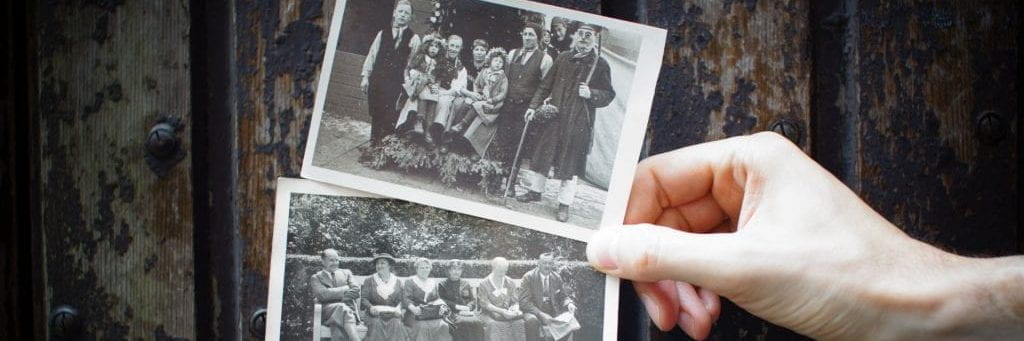
Picture from Unsplash
Overview to Social Change Interview
This interview captures the immigration story of Ricardo Grandison and brings light to a broader historical context of Caribbean migration. The Barbados sugar cane crisis was a period of time when there was a significant decline in the country’s sugar industry. During this period, the once-thriving sugar industry, faced a sharp decline due to government deficits, a decline in exports, and falling global sugar prices. As the industry collapsed, unemployment and economic instability rose, pushing many Barbadians to seek better opportunities abroad. Ricardo’s experience navigating cultural adjustments, citizenship, and identity provides a personal perspective on the larger forces that drove Caribbean immigration at this time. History illustrates both the sacrifices and resilience required to build a new life in a foreign country.
Biography
This is an interview with my father, Ricardo Grandison. My father is a first-generation Caribbean immigrant. He was born on January 1st, 1960, in Barbados, a small island country located in the Caribbean Sea. My father is also a widower. He lost his wife (my mother) a couple of years ago. Ricardo immigrated to the US in 1987. I explore what it is like being an immigrant in America and how immigrating changed my father’s life. We also dive into the economic and political experiences my father had in Barbados and how they have changed since moving to America.
Transcript
Jordan Grandison 0:01
Hello. My name is Jordan Grandison, and today I will be interviewing my father.
Ricardo Grandison 0:05
Hi. My name is Ricardo Grandison. I’m Jordan’s dad.
Jordan Grandison 0:09
Today, we are going to be talking about his immigration process from Barbados to America. The first question I wanted to start with was, why did you What was your immigration experience like?
Ricardo Grandison 0:26
Ah It was, it was okay. It was, you know, different coming to a different coming to country that I’ve been to I had been to once before, but I didn’t really, you know, like it, because it was a new experience to me. But once your mom moved here, then I came, I came again and seeing that she was here, and that was the love of my life, I kind of decided to stay to follow her.
Jordan Grandison 1:06
And what was it like the first time that you came here?
Ricardo Grandison 1:11
The first time I came here was, I think, back in 1995 [1985] or something like that, and I didn’t really like it.
Jordan Grandison 1:21
What did you not like about it?
Ricardo Grandison 1:24
No, you, you, when you, when you’re back home, you hear so much about America and blah, blah, blah, this people, you know, talking up so much. But then when I came and I, you know, driving around, there were so many abandoned buildings and the place, look, you know, kind of ran down to me. So I was like, you know, I don’t really want to, I don’t want to stay here. So I’ve been back home.
Jordan Grandison 1:51
And when you came, where did you go? Like, where was the rundown buildings that you saw? Like, what do you remember the state or place that it was in?
Ricardo Grandison 1:59
It was in it was in New York, in in Brooklyn, in Brooklyn.
Jordan Grandison 2:10
What would you say was the hardest part about moving to America,
Ricardo Grandison 2:15
leaving all my friends and family back in Barbados, because when I came I didn’t, didn’t have, didn’t had no family here, and, you know, I didn’t had no friends, and the only buddy I knew was uh
Jackie, who eventually became my wife.
And, you know, yeah, so that was the hardest part to leave, leave everything that I knew back home.
Jordan Grandison 2:47
Rtight? I know that Independence Day is a big celebration in Barbados. When you lived there, did you celebrate it?
Ricardo Grandison 2:58
Yeah, we always celebrate independence day.
Because this Independence Day is like when we when we we be when the country became independence from the British rule. Because before that we were on the British rule, but then when we became independence, then we kind of stepped out a little bit on our own. But now we’re, we’re fully independent, because we change over from the system that we were using to, I forget what a system is called, but there they change over to total different system where they’re more self, self independent, self independent,
yeah, I think they changed to a republic. If I’m not wrong
A Republic, yeah, yeah, change over to Republic. So now we kind of gotta fend for ourselves.
Jordan Grandison 3:57
right and how did
Ricardo Grandison 4:00
yeah, go ahead.
Jordan Grandison 4:01
How did you celebrate Independence Day back home? What kind of things did you guys do?
Ricardo Grandison 4:06
Oh, it was just, you know, it was just, they usually, with the independence day, they have a parade. And we, yeah, we have a parade, and we, we celebrate like that. And you know, they do a lot of drinking because that’s that’s about all they do is drink
Jordan Grandison 4:30
As an American, as an immigrant. Do you feel fully accepted into American society?
Ricardo Grandison 4:38
Now, I do. But you know when you when you come here and you’re trying to get you know your papers and get all legal and stuff, you feel like a like a outside. You feel like an outsider, well you are. You are an outsider. But then when you [cough] excuse me, but. And when, once you settle in and you get everything straight, and you know, then you you begin to feel the you begin to feel more like an American, and you bring you participate in in a polit, any polit politics, and you start voting. Because I I’ve never voted till I came to America. I didn’t, never voted back home, I voted, you know, here
Jordan Grandison 5:29
yeah, what was it like voting here for the first time?
Ricardo Grandison 5:35
It was, it was okay, you know, you just, you still feel like an outsider, and you you trying to put in your two cents in in politics that you really don’t know too much about, because it’s not a system that you grew up with, is a system that you’re coming to join. So you try to do the best that you can, and try and think to vote for who you think is the best. But who knows? I mean, it’s the it’s the American system, and it’s the way they they do things, is much different than the way we do things better,
Jordan Grandison 6:22
Right. Would you ever want to move back to Barbados?
Ricardo Grandison 6:30
I would move back, but not on a full time, not on a, you know, on a live day, all year round basis, if I had, if I had, if I had the money and the means to I will, I would live there. I will move. I will not live I will go there. You know, like when it’s get cold here, because I don’t like the cold when it come, when it gets back warm I I’ll come back. But, yeah, maybe for like, three, four months out of the year, and then come back
Jordan Grandison 7:07
yeah just go there in the winter time, yeah
Ricardo Grandison 7:12
But on a, well, I couldn’t live, don’t think I can live there on a year round basis, all year round, because, although it’s a developing country, but it doesn’t have the stuff that you know that you have here in America.
Jordan Grandison 7:30
Prior to this interview, I learned a little bit about the sugar industry in Barbados when you lived there. Were you ever involved in the sugar industry?
Ricardo Grandison 7:40
No, I was never involved in the sugar industry. I never, you only time I go in it, the only time I went to a cane, a sugar cane field. It’s the, you know, get can for me, you know, personally, to to suck, because you could, you walk it with cane fields, or walking distance from where I live, and me and a group of guys, we’ll go up there and and, you know, going in canefields and pick, well, I don’t know, it’s not picking can but Cut, cut some cane and bring home, you know, and use that, but besides that, I never was in the never any, any cane industry, any sugar cane industry, never had nothing to do with that.
Jordan Grandison 8:38
Finally, my last question is, how do you stay connected to Barbados while living here in America?
Ricardo Grandison 8:46
Well, I’m very bad at that. Very, very bad at that. The truth is, I really don’t. I don’t I don’t write, I don’t call, I don’t I mean. I still got family there, but I don’t, you know, I don’t have the means to go home, so I really don’t stay connected to my family there, which is a bad thing, because I should, for my kids sake, I should, I should be so that they can know who their family is. You know,
Jordan Grandison 9:32
I know that when, when I am home, I do see you. You know, you listen to Caribbean music, you you watch, like the parades when they go on. I kind of meant, like, that kind of thing, like, um just staying up to date with, like the
Ricardo Grandison 9:52
I stay to date with the music, and I like, I like Calypso. So I stay up to date with with Crop Over I watched, you know, the video when crap over is on, which is comes, which is, every year, a big festival. In some islands, they call it Cannavale. But in Barbados, we call it Crop Over [Crop Over is a traditional harvest festival which began in Barbados, having had its early beginnings on the sugar cane plantations during slavery]. So I stay, I stay, up to date with that as much as I can, but I haven’t been to none of the events in a long time. I used to go when I was home. But no, no, is,
Jordan Grandison 10:41
sorry, what did you call it again? The Crop Over is that on Independence Day? Or is that a different day?
Ricardo Grandison 10:50
No, that’s a different day. The Crop Over is, is. Crop Over is is kind of, a reflection, reflection on when Crop Over got to do with the sugarcane, and we we celebrated at that, at the end of when the sugarcane season, which we really don’t have too much of now, because we’re we’re more a tourist based Island. We used to be a sugarcane island, but we don’t do that much. We don’t do much sugar anymore, if, if any. So all our main thing is tourists. And the Crop Over is a thing we we did, or we still do, at the end of the sugar season, at the end of the harvest, and the last crops come in. Yeah, like the end of the harvest, we call it, and that’s why we call it Crop Over.
Jordan Grandison 11:52
Okay, thank you so much for doing this interview with me.
Ricardo Grandison 12:00
Did you understand that?
Jordan Grandison 12:03
Yeah, I did, all right.
Ricardo Grandison 12:05
No, problem
Interview & Transcription Process
This interview was held over Zoom on March 9, 2025 and transcribed using Otter AI. Otter AI gave timestamps and I went over and polished any mistakes during the transcription process.
Research
The Commonwealth which is a voluntary association of 56 independent and equal countries. They work towards democracy, development, and peace among countries. I read that Barbados is a small island country in the southeastern Caribbean Sea. Barbados became an independent nation in 1966. Yet not until 2021 did Barbados become a republic. After this, they were able to remove the British monarch as head of state and appoint their own president. This transition marked the country’s final step towards full sovereignty. This move is still celebrated among many Barbadians as a significant moment in their history. I would love to ask him something about how he celebrated when in was in Barbados. This research will help me have a better understanding of where and how my father grew up. Learning about Barbadian independence will provide valuable context for my father’s experience and upbringing on the island.
Immigration Policies: Legacy from the 1980s and Issues For the 1990s explains the different laws and how they were enforced. In the 1980s immigration was constantly changing with the institutions of new laws and restrictions. Around this time the U.S. government was limiting the number of immigration visas available each year. This led to a more complex and challenging process for those seeking to enter the country. After reading this source I’m excited to see how tough it was for my father to immigrate to America at this time. Understanding the historical context helps me better understand what challenges my father may have encountered during that era. It also helps me have information that can help me shape better questions.
The author of this source was an Afro-Caribbean immigrant sharing their story. They speak about the Sowell Thesis which is that immigrants are constantly stuck searching for acceptance that will never come. The author is fighting to advance beyond this for true social mobility. The author discusses the Sowell Thesis, which suggests that immigrants are often caught in search of acceptance that will never come. The author is fighting to advance beyond this challenge in pursuit of true social mobility. It also helped me to get another perspective on the Afro-Caribbean experience in America. They explained their social experience as a constant battle to fight against American racism. As an immigrant, they feel like no one makes an effort to learn about the Afro-Caribbean experience. They shared that as an immigrant the American dream and truly feeling accepted into American society is something unobtainable. After reading this source I definitely want to ask my father a question about if he feels included in the American experience.
In the 1980s Barbados was heavily dependent on the production of sugar for many years. Going into the 1980s Barbados was making a great profit off the sugar industry. Yet the industry started to collapse fast and by 1986 the industry was bankrupt. Only a couple years later the economy would go into a deep recession. This source was a great insight into what was happening economically in Barbados around the time my father immigrated.
Bibliography
“Barbados.” Commonwealth, thecommonwealth.org/our-member-countries/barbados. Accessed 28 Feb. 2025.
Rolph, Elizabeth S. Immigration Policies: Legacy from the 1980s and Issues For the 1990s. Rand,1992. https://www.rand.org/content/dam/rand/pubs/reports/2007/R4184.pdf. Accessed 28 Feb. 2025.
James, Winston. “Explaining Afro-Caribbean Social Mobility in the United States: Beyond the Sowell Thesis.” Comparative Studies in Society and History, vol. 44, no. 2, 2002, pp. 218–62. JSTOR, http://www.jstor.org/stable/3879446. Accessed 28 Feb. 2025.
Goddard, Robert. “The Fall of the Barbados Planter Class: An Interpretation of the 1980s Crisis in the Barbados Sugar Industry.” Agricultural History, vol. 75, no. 3, 2001, pp. 329–45. JSTOR, http://www.jstor.org/stable/3745133. Accessed 27 Feb. 2025. (Peer reviewed)