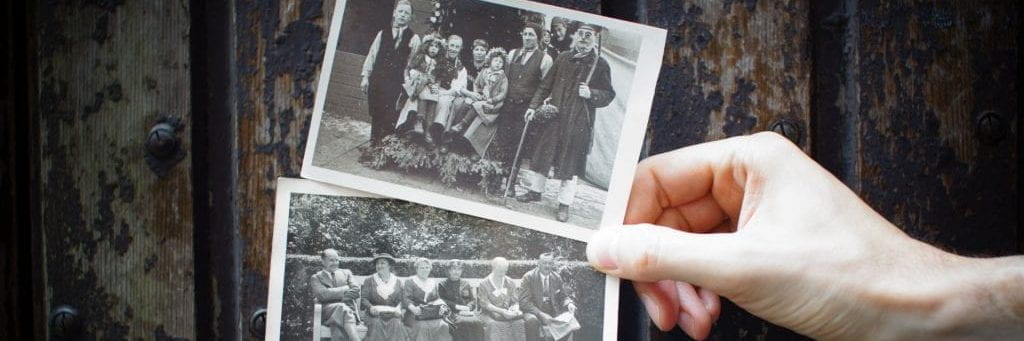

Interview with Henry Tran, Immigrant from Communist Vietnam Goes to America, History 150 Spring 2025, Conducted by Wil Tran, March 9, 2025.
Overview to Social Change Interview:
After World War II, the Cold War emerged between the United States and the Soviet Union (USSR). They had opposing ideologies. The USSR wanted to spread communism while the capitalistic U.S. sought to prevent that. During this time, many countries in South and Southeast Asia were transitioning from being colonies to independent nations. On the way to getting established, these countries would choose between communist or non-communist governments. In the U.S., the Domino Theory proposed that if one country fell under communism, the rest (its neighbors) would soon follow. This fueled efforts where the U.S. would send aid to new or recovering governments globally and even step in militarily to prevent the rise of communist governments.
These instances include the Korean War and the Vietnam War.
On April 30, 1975, Saigon, South Vietnam’s capital, fell and the reunification between North and South Vietnam began. 2025 marks the 50th anniversary.
Immigrants would emigrate their home countries for several reasons. Whether that would be due to famine, war, corrupt governments, education, work opportunities, for the family youth, and so on. There were Vietnamese immigrants around the Fall of Saigon (which has been renamed to Ho Chi Minh City). Vietnamese soldiers who fought with the U.S., along with those who would be immediately persecuted by the new government were evacuated by helicopter. Many others clambered to the embassy and the airport in Saigon to catch the final flights. After that, it was illegal to escape Vietnam, but the boat people tried on small fishing boats that drifted out to sea. Many died escaping through this route.
Under communist rule, people were not allowed to speak (badly) of the government. There was no privately-owned land. Rice that was grown would be sent to the government and distributed equally. While it looked good on paper, the system did not work in practice and people starved.
After growing up in communist Vietnam, Henry Tran came to America with his family through the American Homecoming Act (Immigration Act of 1990 iteration) which allowed his adopted sister, who is half-American and half-Vietnamese, to come to the U.S. On the way, they stayed in a refugee camp for half a year in the Philippines where Henry learned English. Learning the language was key to moving to a new country.
Aside from bringing his sister to a place where she would be treated less poorly (anti-American sentiment was present in Vietnam), the United States also had better education opportunities compared to Vietnam’s schooling system. In Vietnam, a person’s chance for opportunity and advancement would be cut short at age 15 if they did not pass a crucial exam. Very few passed it. This kept many people poor and in the same social classes.
Today in the U.S., Vietnamese Americans are most concentrated in Orange County, California. It has the largest population of Vietnamese people outside of Vietnam. Compared to before the 2000s, Vietnamese immigrants today have technology such as YouTube and social media to learn about everyday life in the U.S. before experiencing it themselves. Most have pre-established communities to join and families still immigrate today in order to bring money home for their families or to make a life there.
Biography:
Henry Tran was born on January 1st, 1975, in Da Nang, Vietnam. His family consisted of five older siblings, his truck driver father and farmer mother. He went to school through the 10th grade in Vietnam and finished his high school education in Erie, Pennsylvania. On the way to the U.S., he stayed in the Philippines for half a year at the Bataan refugee camp and learned English. He arrived in the United States on February 28th, 1992. After he graduated from high school in 1994, he went to Penn State (Pennsylvania State University) for college. He currently has an MBA from Shenandoah University. He owns a nail salon and creates inventions that would help nail technicians in the nail care industry.
Transcription:
Wil Tran 0:00
Mm…
Henry Tran 0:01
Okay, right? I put-
Wil Tran 0:02
Mhm! We are now recording. This is a digitally recorded interview with Henry Tran. The interview was conducted by Wil Tran on Zoom on March 9th, 2025 at approximately 2:00 PM. Today, I’m interviewing my father on his immigration experience to the U.S. [United States of America] from Vietnam in the 90s. […] I was asking, ‘How are you?’
Henry Tran 0:27
Good, I’m good.
Wil Tran 0:28
Yay, that’s good. Can you describe the reason or reasons for your immigration?
Henry Tran 0:37
Oh, it’s just lucky that my family were raise the kid who half-Vietnamese and half-American. And after the war, they abandoned, those kids, and they were treat very badly in the Vietnam society by that time, because they have anti-American [sentiment]. So, the Congress passed the act, they call the “Come Home Act” [American Homecoming Act] so they try to bring those [orphaned] kids back to U.S., and my family were ones of them, that’s uh, we have a kid, and we raised them so they allow to go with them, to live in U.S. So, that’s the great opportunity of my life. So I go with- I went with that.
Wil Tran 1:31
[Could you compare] how it was growing up in communist Vietnam to living in the United States?
Henry Tran 1:40
What- what your question? I’m sorry, I didn’t hear it. You say, ‘How…’ can you repeat it? Oh, compare.
Wil Tran 1:46
Yeah, compare how it was growing up in communist Vietnam versus the United- living in the United States.
Henry Tran 1:53
Yeah, um. Exactly right now, it is easy for you if you look at North Korea. So, it exactly what I grow up. So the government in control everything. And also because we are from the South Vietnam, so we have more oppression, because they reunion they call the- what the word… [Liberation.] They come like they give us more than anything else, very hard. You have to listen whatever the Communist leader say. And you can talk, you have freedom of [almost] everything, but you cannot talk about the government, about the Communist Party [of Vietnam]. You cannot against them or get any opinion about them. If you say something, they will arrest you. And sometime, some people have a secret, [secret police] come at nighttime and you’ll never see that person again. And so that’s very hard, and you live in kind of scary [in fear of], the government officer. And in U.S., it’s different, like you can do freedom with everything [especially] with government, you can protest against whatever you don’t like [about] the government, but you cannot get the freedom of each other.
So for example, like in Vietnam, if I have a loud speaker, like I get loud music, and my neighbor can complain [to] me, but it’s up to me if I can shut it [the music] down, be nice, or be nasty. So maybe we have argument, you know, the voice or physical whatever, but the government never get in [interferes]. But here, if I get loud after 10 P.M., the neighbor can call [on] me, the cop come and told me to, you know, shut down. Maybe I do again, after three times, they will issue me the ticket. So that’s how [they do] the freedom. So, in Vietnam, you cannot talk about the government, but you can do very much everything for yourself, but in here, like you can do against or protest government, but you have to respect individual freedom. You don’t interfere their will. So that kind of everything the opposite, yeah, it’s like that.
Wil Tran 4:41
Dang… I haven’t heard of that before.
Henry Tran 4:44
[Laughs] Communism! That’s why [when] a lot of people want to go to socialist, and I say, “Oh my goodness.” When you live under that, you understand. But right now, it’s good on paper. It’s good on like society, but it’s hard because the oppress of government, and then, if you are the officer, you are rich, and the people, you poor. So, you know, it’s not true. When they said.
Wil Tran 5:15
What is the difference between socialism and communism to you?
Henry Tran 5:22
…I have no idea. I think they are the same. Because, they [are called] communist Vietnam, but you can read their name. They, I think the Vietnam [is] still the only country in the world that have a “Socialist” in their name. I think Vietnam, Socialist Republic? [Socialist Republic of Vietnam] You know, like China, they communist, but they, they don’t put the socialist, they said, the People Republic of China [People’s Republic of China], or the People Democrat Republic of… Korea, [Democratic People’s Republic of Korea] I think. But Vietnam only the country that put the Socialist Republic of Vietnam! So it’s, for me, it’s- it’s the same, because the idea is before, for example, Vietnam were the one of the best [agriculturalists]. They well-know about the rice and even long time ago, that our [U.S.] President, Thomas Jefferson, they want to buy some rice from Vietnam at his time. So that’s how you know that Vietnam really good at rice, but, under communists, under my time, we don’t have enough rice to eat, so it’s very tough. That’s why, maybe when you and your brother grew up, Mom and I always, you know, worry about- hungry [hunger]. But the reason because they took all the land from private-own to the public-own it mean the government will own the land, and they divide for everyone, because that’s great idea, that everybody have land to do the agriculture and contribute back to the government, and the government will distribute the rice, I mean, the portion for that. I think that’s a great idea that help a lot of poor people, and the people [who] don’t have a land, to have a land to work. But the problem is, when you work like that, they don’t have their rice [they don’t get to keep the rice that they grew]. So, the rice were distribute [evenly to] everybody. And it turned out like everybody lazy. They didn’t work hard. So they say, “Why I work hard? And then the guy not work hard, have the same amount as I do?” So it end up nobody work hard, and they don’t have a good rice. So that’s why we don’t have a rice to eat. And now, they go back to the private-own and you know that right now, Vietnam were number two? I think number two or number three, export rice in the world, after India, Thailand and Vietnam- I think that’s top three. So that is the how example, under socialist and communism, whatever, and with the kind of capitalism, like private-own and do. So for that example, you can see that capitalism a lot better than socialism. But the idea of socialism is better on the paper, but not in reality.
Wil Tran 8:59
You don’t quite know much about socialism either, but I think you are definitely describing communism? And yet, now I understand why you think communism is that bad and capitalism is better ‘cause, [because] you always told me that the people won’t work hard because, like, the neighbor isn’t working hard, so nobody is doing anything. But I didn’t realize, like, I thought it was just like a job or work thing. But this makes more sense to me, why you think that, because this was like a food shortage thing, which is very serious, so I understand better now. So, wow.
Henry Tran 9:34
I-it’s reality. It’s reality. You can go back and you check online, on the producing rice for in the after ’75. So when the South Vietnam were lost and the Communists took over, and you can compare that, and I lived over there, so I experienced that. That’s how we get hungry and we’re very poor- it look similar to North Korea. We don’t have enough rice to eat. And it’s funny… we are the producer, like top in the world, but we don’t have enough rice [laughs], and we don’t understand by that time. But now, when I live in U.S. and I look back and say, “Ah, so that is the problem.”
Wil Tran 10:22
[Back to] our main topic of immigration. So, on the way to the U.S., you stopped in the Philippines to learn English. What was daily life like, and was it like a refugee camp there?
Henry Tran 10:40
Yes, this were the best of refugee camp. And you understand like we are the first boat people in the world, and until the Haiti, so you get to see how people use the boat escape from Vietnam. So my refugee, they call the [Bataan] refugee [Bataan Philippine Refugee Processing Center], so it live- I think it’s really close to the [Bataan Death March] in when the World War Two, when a lot of Americans [prisoners of war (POWs)] die, when they liberation Philippine from Japanese. I live in there, but that’s they describe like the best refugee camp that where people they allow to go to the third country, like some, Canada, U.S., European country or Australia, to immigration after they I think they approve their [political asylum]. So we live there to learn English and to learn the culture, to learn what the life in America or what other country. But before me, it’s still very, very, very poor condition. I was shocked, I say, ‘Oh my goodness, this is how my life start?’ So it’s but it’s really good purpose, because I will learn English. So I will went to school. Look like high school here, middle school, whatever they to put a group of teenager together look like the mix of middle school and high school. So we learn English by Philippine teacher. Sometimes we talk with some American who work for I think maybe it’s similar to U.S. I.D. [United States Agency for International Development (USAID)], but I don’t remember, but it’s for some organization that help the refugee. So yeah, we have the time to learn. And I know the people who [are] adult, they learn to trade school like how to build the house and how to fix the car, so it looked like they have the good prepare for the new life in U.S. And that’s, were very, very impressive for me. Even the living condition is not that great, but the job prepare and the culture, learn the culture. That’s, I think that’s, that’s great.
Wil Tran 13:20
I see. I guess you’re saying it’s great. So it was helpful to learn all about that, like the culture and the language?
Henry Tran 13:29
Yes, yes, in a way. But I still shocked when I come to the real U.S., because that doesn’t- but like, compared with people [who] didn’t learn in there. So I think we are better prepare.
Wil Tran 13:41
I guess you just- you did explain how you learned English. You said you were in a middle school, high school, mixed class, and had a teacher.
Henry Tran 13:50
Yeah, we learned English. But you know that we learn, we have an accent in Vietnamese, and we learn from Philippine teachers, it would mean they have a little bit accent. It’s similar to like people Hispanic accent. So that’s why, when I come to U.S., when I speak, nobody understand [chuckles], because by that time, we don’t have a YouTube, we don’t have anything. So I had to relearn again for the pronunciation.
Wil Tran 14:24
[I heard that for] some people learning, like if they had a TV, I’m guessing you guys might not have had a TV, but some people like, earlier-
Henry Tran 14:37
Yeah, but, but in refugee camp, that a luxury. No, nobody have a TV, I don’t think so. I think at the end of the- we call the weekend, they learn like in U.S., so they have a movie, but in the- look like the soccer stadium or some big picture from the church. So that’s how the church will get- take advantage. So what they do is they put a lot of movie, in, like the life of Jesus, you know- they do the missionary, because nobody have a TV. And if you have movie, that’s great. It doesn’t matter religion or what, we just go out there to watch, you know? So it’s kind of, nope, we don’t have TV- in refugee camp.
Wil Tran 15:26
Smaller question I forgot earlier was, “How important would you say knowing English is coming to America?” I guess you sort of did answer it, but-
Henry Tran 15:38
Yeah, I think that is that’s very important point, because you know English, at least you understand. You don’t feel lost, you don’t feel scary [scared]. You know, because I think that’s the most fundamental for everybody come to other country. They need to learn the language at least, and then the culture. So, without no English, even [if] I couldn’t speak, people understand me, but I know how to read and write, so that’s helped a lot. That’s why we’ve- the first we flew from international go to Los Angeles, and then people who like [are] translator. They work in LAX, Los Angeles International Airport, but when they put my family on the airplane from Los Angeles to Pittsburgh, Pennsylvania, so we had to flew over that [leg] and I feel calm, very confident to fly by my family, because I’m the only one who can speak a little bit English. But we, we don’t feel scared. We, if I’d say [and] they don’t understand, I wrote, I wrote down, like, you know, ask for water or something. And also, when they down, we have a transfer to go to other gate, because I have to go from Pittsburgh to Erie, so I use my broken English to ask the people [on the] ground to help my family to move [to] that gate. It doesn’t smooth, but it’s, it worked, it went through, and we reached the destination in Erie, Pennsylvania. So I think to learn English is very, very important for the new life, for any migration. Yeah.
Wil Tran 17:39
Yeah, that’s, that’s amazing. I have two things. Which family members did you go with, if you want to tell and… how did you know you were going to Erie? Like, how were you split up to different regions in the U.S.?
Henry Tran 17:59
Well, I went with my parents, my mom my dad, and my sister, and her husband. So we are the family of five. The reason is the Vietnamese; the problem is they from tropical weather and also the fall of South Vietnam. So you can think about right now. It actually, actually, it’s very sad, but it’s happened exactly the same with recently in Afghanistan. So 40 years later, American did it again. [small chuckle] So in ’75 many people who work for U.S. government. They have all the rich people, or they know that the fall of Vietnam, you know, so it’s kind of very sad today. You know, we can look to the political that happened to Afghanistan, but like it can happen, similar to Ukraine right now. I watched the interview. You know, they argued. Sorry, we get to the lit-, a little bit political, but I see the way of President Zelensky. He act, it looked like the president of South Vietnam. But that’s- I hopefully not. But that’s very sad that the- the president of South Vietnam, they say, ‘Oh, U.S. don’t give me the aid. So, I have to withdraw on the west of Vietnam, South Vietnam.’ So he tried to lose that, so the communist- the North Viet take advantage and that it come down to the fall of, of South Vietnam, because he don’t defend for his own country. He depend on American aid assistance. I hope not with the Ukraine, because, you know, we want Ukraine success and defend for themself. Because myself, I just want them somehow, U.S. government, especially with President Trump, need continue to support them. That’s only my opinion, because I were in South Vietnam, and I see South Vietnam’s fall-down [downfall] and affect a million, million family. So anyway, I go back with the question is, so by the fall of Vietnam, a lot of people, they can flee country by airplane, and the rich to U.S. soil right there, and also the boat people, many people who live in U.S., before my time, before 1992. So the problem of Vietnamese came to U.S. is out of 10 family, 9 family is stay in Southern California or in California. Because they have the relative, they have friends, and also the weather. You know, they love the warm weather. So my family don’t have any people, so they call the… I remember, IRC [International Rescue Committee] or OEM [International Organization for Migration (IOM)], some international refugee organization. So they- the family who don’t have the friend or the people, to [sponsor] them. So they can, you can go to any state beside of California. So I were, we, we just random select people from the church, I think, from Catholic church in Erie, Pennsylvania. The [IOM], it’s run by Catholic, but it not really. So, they sponsor my family. So that’s how we end up there. But most of Vietnamese in the 90s they came to California, [especially] Orange County. So that’s why, now you can see why a lot of Vietnamese live in Orange County, very much. I don’t know the number, but the few years ago, I think it’s more than 300,000, maybe 500,000 now. And you, you can- it’s hard to imagine like I’m from- I live in Winchester, Virginia right now, and we have only 25, 28,000 [the population of all of Winchester, VA] and you can see in that area and so many Vietnamese concentrate. And it used to be like, they are the third most popular populate Vietnamese in the world. So you had to count in Vietnam, like Hanoi capital, and they call the Saigon city [now known as Ho Chi Minh City], that two big city, and then maybe another, Hai Phong or my hometown [Da Nang]. So people who live in Orange County actually became one of the biggest population city outside Vietnam. So that’s, that’s crazy.
Wil Tran 23:13
[This goes with what I heard from] you guys, and I did see the large community over there. I always wondered. I mean, now I know it’s because you ended up in Pennsylvania because you guys didn’t have family that was already established here, but even though- then you’ve been in the U.S. for a couple of decades. So I had a small question like, ‘Why have you not moved to any of those states, like California, Texas, Florida, Washington state, with the larger Vietnamese communities, because there are more larger communities there?’
Henry Tran 23:47
I think maybe the reason because I came as a teenager, so I get adopt to the culture and the society easier. So it doesn’t matter for me where I live. But also I come to Erie, so Erie, you know that they have a lot of snow and cold, so I’m okay with the cold now. [small laugh] Actually, Winchester is great. So I just go like for the job, so where, where am I at, and for the family. So, we believe that small cities do better for my kid to raise up. So that what I think, it’s greater [better] for myself. I want what the best for my family and you know, and like your mom, where she from, Orange County, so she agree, because in Orange County, she can see that the environment you raise the kid is not good, especially with the Vietnamese. By that time, they still have some gangster and they get some, a lot of negative, you know. So we don’t want our kid to learn some of the bad stuff. And we believe that this is your country. So you can raise anywhere. You can just be the- just American, like all the kids. You can learn the culture to be that. So for us, maybe, maybe when we retire, we may go back there, but, but we okay, yeah. I think that that’s the reason. If you, if you went to U.S., that when you older, so it tend [tends to be] like you want to be with your community, because where they have a food and people and the culture. But when you go to [America as a] teenager, and then you can speak English, you can understand, especially like I went to college. I went to Penn State [Pennsylvania State University] and everything like that. So, it give me like doesn’t matter where I live, so I guess that’s what my answer.
Wil Tran 26:07
[Inaudible] and I guess, you already did start on one of them. It was uh, ‘Could you tell me what Pennsylvania and its culture was like compared to what you grew up with, uh, in Vietnam?’
Henry Tran 26:20
Yeah, it’s, it’s, it’s kind of very different. Well, maybe the school. In Vietnam, like in in high school or in middle school, you are in the group. You in the same, same that group. Like, I think, in the class about maybe from 30 to 40 kids, you know, for average, I mean some more, some less. But you will stuck with those kids until from first grade to ninth grade, and then when you go to high school, your group maybe split. And then even in high school, and then you will stuck with the new group for that three year. They… so, it’s funny, like when I heard the class reunion. So it’s opposite to U.S., like the teacher hold the classroom. But in Vietnam, the students, stay in the class, one class forever. So the teacher will walk [to] each class. So they don’t have like in U.S., the student had to move from classroom to the classroom, so that my culture shock. So it’s kind of opposite. But to do that so you create the bond. So you know that people for your whole life. So as you know that, now I still have this friend with some people I grew up, I went first grade until- because I went there in 10th grade, so just one year in high school. So the system is this kind, kind of opposite. And everything, I think, is the East and the West is kind of opposite, a little bit. For the fashion, for example, with the girl. You know that the, I think in U.S. the girl will be pushed the- in the front of their t-shirt, in the jean and the back- the it cover the butt. But in Vietnam, it opposite they cover in front. And they can, they can lift in the butt. So it’s, it’s kind of different and also like the market. Like in here the supermarket, and I think because you have the refrigerator, the freezer and you know, the refrigerator so you can… store the food. So you just go to supermarket, you buy, you buy, maybe once a week or, you know. But in Vietnam, you have to go every day. You get everything fresh. That’s what I discovered, that the Hispanics, they love. They don’t have a frozen food in the house. They love to eat the like the vegetable, the vegetable, it just like all the fresh one. So it’s similar to Viet. In Vietnam, but I knew that because we- we don’t have something to hold, so we have to go every day to get meat and fish. So everybody have to sell the fresh one. And that the one thing you miss when you have the fresh thing you cook, is a lot better than the freeze [frozen]. So, you know, that’s, that’s kind of culture shock, some of them, yeah. And then another, like, I’m from the poor one, so we just have a bicycle and moped. And here, everything car, and bus… so yeah.
Transcribed with the help of https://otter.ai
Summary of the Rest of the Transcription:
Wil Tran asks Henry Tran about differences in the education system that he (Henry) observed in Vietnam versus in the United States. Henry explains that in Vietnam, it is more memorization-based. You don’t have to understand how to get there, just memorize the formula and be quick, (if you have a good memory, you are a very good student) while in the U.S. they will explain the math steps to you and why that formula is being used. Vietnam’s high school 12th grade is equivalent to the second year of college in the U.S. It’s like if you went to high school in America and took a lot of AP (Advanced Placement) courses, so when you graduated, you have nearly two years of college already. So it’s very crucial for people to go through the upper levels of high school in Vietnam. Unfortunately, the system kills a lot of people’s futures. You have to take an exam to graduate 9th grade, and if you passed that, you take another exam to get into high school. With those two exams, it drops about more than 60% of the students, and they cannot continue their education. It’s like your life ended right there. You couldn’t continue to advance in life through education. Those who do not pass become workers. They’re about 15 years old.
In 12th grade, it’s similar. You take an exam to graduate the grade and another exam to get into college. It’s really difficult, it’s like you’re trying for Harvard. Probably less than 5-10% make it to college. Henry said that during his time, only one or two made it in out of the whole entire village. The village would be very proud of anyone who got in. Those who go to college are well-respected. This is why Asian parents are very hard on their kids. Without education, you cannot go anywhere. You can’t work in the government unless you have family already working there or connections. Otherwise, the only way you can get anywhere in life is through education.
Henry thinks he’s found out why the Vietnamese are really into small businesses. In the U.S., they say that people with “B” average grades work under people who had “C” average grades. And those who had “A” average grades worked under people who got “B” grades. Entrepreneurs didn’t do well in education. “B” people ended up in management. “A” people are really smart and specialists. This is why Vietnam has the most business start-ups in the world. He guesses that since they missed that opportunity in education, they turned to entrepreneurship to survive.
Wil Tran also asks Henry Tran why did he or his family believe there were better educational opportunities in the U.S., since a lot of immigrants go there for opportunities, such as better education, but acknowledges that the question may have been answered already.
Henry Tran mentions Joseph Allen, a man who has passed away but was very successful and owned a KFC in Winchester along with many hotels. Allen got his GED in his 70’s or 80’s. JMU invited him for a talk, where he expected he would be talking to students. However, it turned out he was speaking to faculty instead. They wondered why he got his GED very late in life when he was already very rich. Well, that was the thing. He missed it so he wanted it. So in the U.S., it doesn’t matter what age you are, you can get your education by your will. Even if you’re poor, there’s financial aid, and if you have some money, there are loans. The American system and beliefs encourages education. That’s why Henry got his MBA late in life. In Vietnam, the system in his time discouraged that. At 15 years old, you couldn’t go to school anymore, while in America, you can still go to school in your 70’s if you wanted to. There are so many opportunities in the U.S. such as wages. He isn’t surprised that’s why many people come to the U.S. to chase the American Dream.
Wil asks Henry if he has achieved his American Dream or is on his way. Henry thinks that he may be on his way. He says it depends on the person on what their American Dream is. While he was growing up, it was living in a nice house in a nice neighborhood, owning two cars, having a good family and a good job. He wants to pursue a little bit more. He wants to start a new chapter in his business. He still has a lot of opportunities and hopes to be successful within the next year. He’s in the process and is using his education with something that he loves to do. If he’s successful with that, it will be his American Dream come true.
Wil wishes success for Henry.
Wil asks Henry to compare how it was for Vietnamese immigrants in the 90s compared to today.
Henry says that it’s very different. In his case in the 90s, they didn’t really have anyone (other Vietnamese). There were just Americans and when he went to Erie, he had no idea about the culture and the weather. It was the first time he saw snow in his life. It was like they started at the beginning with nothing. He likened it to those who immigrated in the 1800s. He and his family got help from the government and 6 months of food stamps. You had to work to start your life. He went to school and worked. For the Vietnamese nowadays, since there is a lot of family already in the U.S., they can go to them. Henry’s older sister went to live with his adopted sister. She didn’t need help from the government and adapted to her life in the U.S. very quickly. With the internet, the Vietnamese now have a better idea of what to expect in the U.S. Back when they had only Hollywood movies where it showed getting a nice high pay raise and a better life, it didn’t depict how hard Americans worked to survive to achieve their dreams. Vietnamese now are more prepared and have relatives to help them for a better transition. Even though some Vietnamese abuse the system with open-border crossings where they pay to fly to Mexico and cross the border. They stay with their relatives or someone else and become undocumented immigrants. Since there is such a strong Vietnamese community now, some Vietnamese don’t care about learning how to speak English and just stay in their communities, similar to some Hispanic ones. They just stay there and survive. So it looks very different after 30 years.
Wil asks if Henry had a plan for his pathway to citizenship since he immigrated legally and is a naturalized citizen. He also asks if less people are trying to get naturalized now.
When Henry landed in Los Angeles as a legal immigrant, he already had something similar to an I-94. During his family’s 6-month stay in the Philippines, they had been processed so when they arrived at Erie they got the green card. After 5 years in the U.S., he could take a test to become a legal citizen. His legal pathway was simple.
He explains that even by crossing the border illegally and not having committed crimes like murder and robbery, that person would still be considered a criminal under U.S. law. This would make it difficult for them to obtain a green card because they can’t pass background checks. It’s sad that some people who come to the U.S. to work and do a good job weren’t allowed to stay. He hopes that both parties in Congress can do something where if that’s the one criminal thing about those migrants (illegal border crossing), to forgive them and give them a legal way, make them register, require them to learn English, to never do other criminal acts, and be given a path to get U.S. citizenship. Henry says that we cannot have an open border like that. People who want to come to the U.S. have to apply and do it the legal way. It shouldn’t be easy where anybody can come and go in case a criminal or terrorist can get into the country very easily. It’s unfair and compromises security. He says he knows it depends on your own opinion, but his thing is that because he’s an immigrant he wants everybody to have a second chance to pursue their American Dream. So he hopes the politicians would sit together to make a solution so that they won’t have to send people back to their countries if they’re not a serious criminal. To give them a second chance to become a good U.S. citizen like him.
Henry Tran: You know, I still love this country and just thank you America to give me to my dream to raise my family and hopefully, like my children will be contribute more to this country, because that’s the will, the country they were born in here, and make American, you know, strong and more friendly with everybody in the world, you know.
Wil thanks Henry for joining the interview and answering questions.
Henry Tran: Thank you for giving me the chance to give my opinion. And actually, it’s really cool to remind me a lot in my life, to get to American. Thank you for your class. That’s I think that’s great.
Wil says that they learned so much about things that they did not get to hear about (as a kid). Wil and Henry say their good-byes.
Post-Interview Research:
Vietnam has had a long history of combatting outside forces before becoming the nation it is today. In the past, China had added it to its empire for a thousand years (111 BC-939 AD). In the late 1800s, the French colonized Vietnam along with Cambodia and Laos, which became known as French Indochina. During World War II, Japan invaded Vietnam in its attempted conquest of Asia.
After WWII, there were two governments vying for control, backed by more powerful countries. China and the USSR supported the Democratic Republic of Vietnam (North) while Britain and the U.S. supported the State of Vietnam/Republic of Vietnam (South).
Two key Vietnamese leaders in this government struggle were Ho Chi Minh and Ngo Dinh Diem. Having witnessed the oppressive and unfair treatment of the French on the Vietnamese during its colonization, fueled Ho Chi Minh’s desire for his country’s independence. He took a revolutionary-nationalist approach and founded the ICP-Indochinese Communist Party and worked with the Vietminh. Ngo Dinh Diem had an anti-communist stance on the country’s future government, which gained the support of the West. In the 1950s, struggle for which government should be in power escalated into civil war.
Vietnamese immigration that was tied to end of the Vietnam War could be categorized into waves. In the first wave (1975-1978), the Vietnamese who were evacuated towards the U.S. military’s last days in the country had served as military personnel on the South side and would face harsh punishments under the new government. Many others fled and 130,000 refugees were given asylum in the U.S. and placed in camps at military bases throughout the country. In the end, an enormous part of the population settled in California and formed enclaves known as “Little Saigons”. In the second wave (1979-1982), refugees were fleeing persecution (such as Vietnamese with Chinese heritage) and economic hardship. The Sino-Vietnam War highlighted the tensions between Vietnam and China. The third wave, which stretched from the mid 1980s throughout the 1990s, was spurred on by acts such as the Amerasian/American Homecoming Act that allowed Southeast Asian children to reunite with their American fathers. A large number of the third wave was considered refugees, the ones who came later would be identified as immigrants. (Refugees were forced to leave their homes while immigrants had the choice.)
April 30, 1975, was the day South Vietnam fell. It is known by many names. Reunification Day, Victory Day, Liberation Day.
For the diaspora, the Fall of Saigon is known as Black April. They lost their homeland. They did not want North Vietnam to take over and reunite the two halves under the communist government. South Vietnamese soldiers who stayed behind and didn’t leave were sent to prisons known as “re-education camps”. Other people were persecuted and sought to leave.
In the United States, Orange County communities in California have acknowledged the anniversary. There is lasting impact today. Not only were veterans affected, but the generations that were raised by those who experienced it as well. Many Vietnamese who were affected by the communist government rarely talk about the past to their families. Though learning details about these events could give the newer generations more understanding of what had happened to their loved ones.
Interview and Technology Process:
I interviewed Henry over Zoom using my laptop and he used his phone. I sent him the link, meeting ID, and meeting passcode and we worked out known issues before recording. I used an audio converter online to convert the file saved from Zoom into one that I could use for the Otter.ai transcription service.
Transcription Process:
I liked that Otter AI omitted most of the “um’s” and “uh’s”. I personally found them distracting. I did add some to help with the transcription though. I used the Columbia Style Guide on how to add more detail to things that I took note of while transcribing. I eventually went with what “felt right” with me. I was advised to make it into standard English, but in the end, I really wanted to keep things the way my dad said them but also wanted it to be a bit clearer. I asked him for clarification on some words and events. I summarized the second half of the transcript. When he got to look at the transcript, it helped to fill in some of the blanks.
Bibliography (MLA):
Cohen, Josh. “Cold War: What Was It and What Happened?” History on the Net, Salem Media, 23 June 2023, www.historyonthenet.com/cold-war. Accessed 6 May 2025.
Elattar, Hosam, and Noriko Ostroy. “From Exodus to Emergence: Black April 50 Years after the Fall of Saigon.” Voice of OC, Voice of OC Orange County’s Nonprofit Newsroom, 25 Apr. 2025, voiceofoc.org/2025/04/from-exodus-to-emergence-black-april-50-years-after-the-fall-of-saigon/. Accessed 13 May 2025.
Jeffreys, Alan. “British Decolonization after World War 2 1945-1948.” Imperial War Museums, 2025, www.iwm.org.uk/history/britain-and-decolonisation-in-south-east-and-south-asia-1945-1948. Accessed 6 May 2025.
Khan, Nisa. “50 Years after the Fall of Saigon, How Can Vietnamese American Families Process the Past?” KQED, KQED, 2 May 2025, www.kqed.org/news/12038447/50-years-after-the-fall-of-saigon-how-can-vietnamese-american-families-come-to-terms-with-the-past. Accessed 13 May 2025.
Kula, Stacy M., Tran, Vinh Q., Garcia, Iraise, Saito, Erika, and Paik, Susan J. (2021) “Vietnamese Americans:
History, Education, and Societal Context.” Journal of Southeast Asian American Education and Advancement, vol. 16, no 1, 9 June 2021, https://doi.org/10.7771/2153-8999.1201. Accessed 12 May 2025.
Stur, Heather. “Why the United States Went to War in Vietnam.” Foreign Policy Research Institute, 28 Apr. 2017, www.fpri.org/article/2017/04/united-states-went-war-vietnam/. Accessed 6 May 2025.
“The Fall of Saigon (1975): The Bravery of American Diplomats and Refugees – the National Museum of American Diplomacy.” Stories of Diplomacy, National Museum of American Diplomacy, 29 Apr. 2021, diplomacy.state.gov/stories/fall-of-saigon-1975-american-diplomats-refugees/. Accessed 6 May 2025.
Photo Credit: Taken by Henry Tran in Da Nang, Vietnam 2024